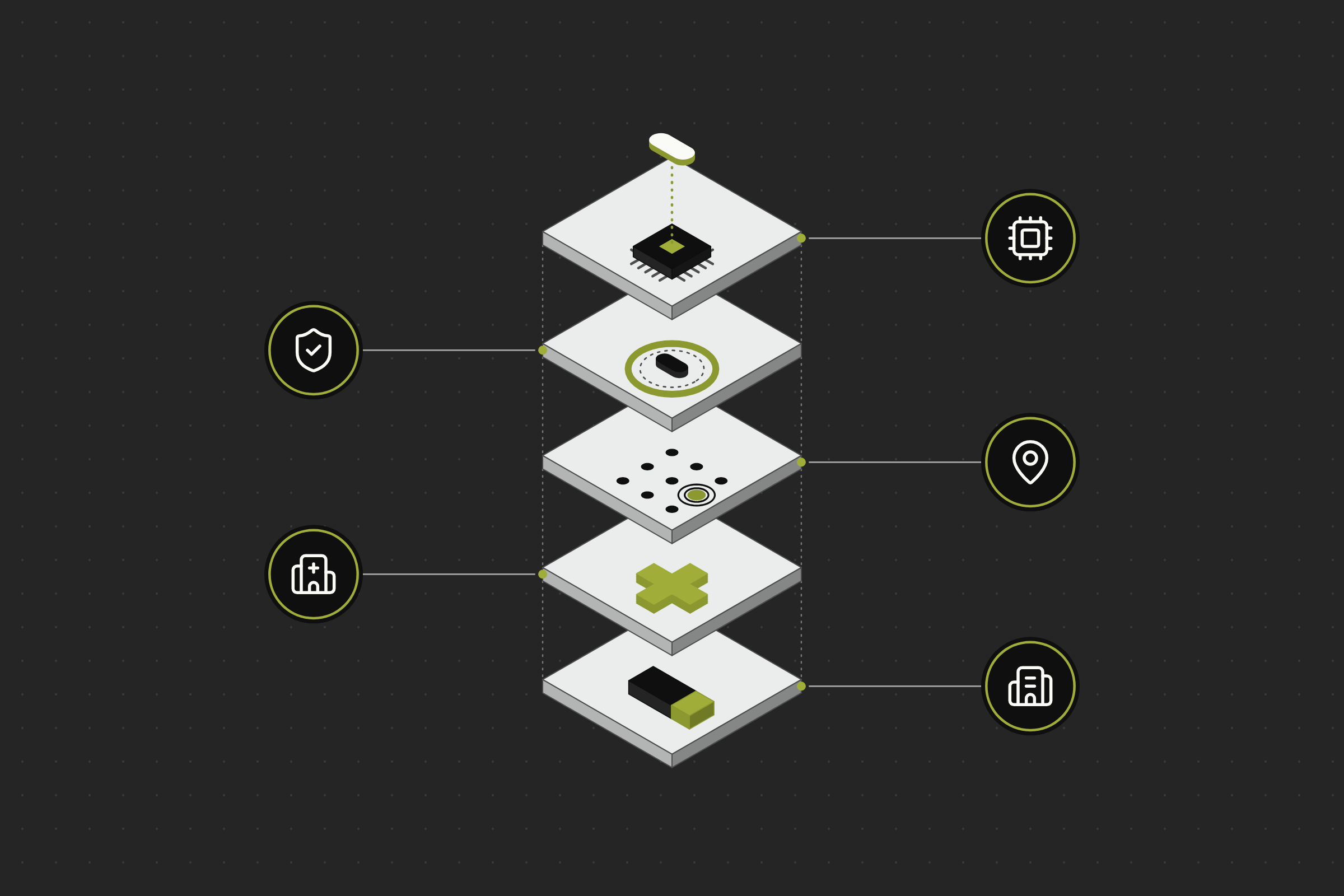
Physical security infrastructure is becoming a cybersecurity, governance, and investment concern. These five developments show how controller design, encryption standards, device data, hospital safety requirements, and integrator investment are changing the way organizations evaluate connected security systems.
1. Access controllers face a wider cybersecurity gap
(HID / Mercury Security, Sep 29)
Mercury Security surveyed 561 security professionals. 32%said their current access controllers lack required cybersecurity features, up from 21% a year earlier. 74% said coordination between cybersecurity and IT has become harder to manage.
Teldio Perspective: The findings support phased modernization and interoperability, but interoperability is not a cybersecurity control. Host security, identity, encryption, patching, and monitoring still require separate decisions, often involving more than one department. You need to know “who owns what”.
2. ONVIF advances standardized TLS configuration
ONVIF published the Release Candidate for TLS Configuration Add-on 2.0. It allows a conformant client to configure and update TLS settings on a conformant device. The specification is scheduled to replace version 1 in early 2027.
Teldio Perspective: A common configuration method can reduce integration friction. Encrypted transport still needs confirmation for each product, version, and connection used in the approved workflow.
3. Exposed credentials revealed a large device map
A researcher used a token available on a public Flock site to map about 170,000 cameras and 130,000 other devices. Flock has publicly cited more than 120,000 cameras, a different category from the report’s combined device total. A firm identifying itself as acting for Flock later submitted a trademark complaint and takedown request.
Teldio Perspective: Device metadata can expose locations, scale, and network structure even when camera feeds remain protected. Credentials, inventories, and public-facing tools need the same access controls and monitoring as the systems they describe.
4. Hospital workplace violence standards move into one goal
(The Joint Commission, effective Jan 2026)
The Joint Commission’s National Performance Goal 2 reorganizes existing workplace violence requirements for its Hospital and Critical Access Hospital accreditation programs. It covers leadership, a multidisciplinary team, training, reporting, follow-up, governing body oversight, and an annual worksite analysis. The change adds no new requirements.
Teldio Perspective: Technology can support documented notification, escalation, reporting, and follow-up. It does not establish compliance on its own; the accredited organization remains responsible for the program and the evidence surveyors review.
5. Knox Lane acquires a majority stake in SAGE Integration
Knox Lane, a growth-equity firm, buys a majority stake in SAGE Integration, a national integrator, outright. Both firms said the investment will support talent, technology, business development, operational improvements, and complementary acquisitions.
Teldio Perspective: This deal shows investor interest in integrated security services, and there’s been healthy activity, but is it an industry-wide consolidation trend? Customers should still ask how ownership changes may affect support, technology choices, and partner continuity.
What it adds up to: Connected security systems are being judged on more than whether they exchange data. Buyers also need to know how devices are secured, who can access system information, how workflows support documented responsibilities, and how suppliers will maintain the environment over time. Which connected system would be hardest for your organization to inventory, secure, or audit today?