TL;DR
Operational risk can sit beneath the physical security dashboard. This edition covers active Node-RED exploitation, critical PHP vulnerabilities affecting Siemens products, ADT’s pending acquisition, AI analytics across existing cameras, and a 41% increase in accepted time-loss injury claims related to workplace violence among healthcare workers across a Canadian province. Together, they highlight the need for authentication, segmentation, portability, and documented response workflows.
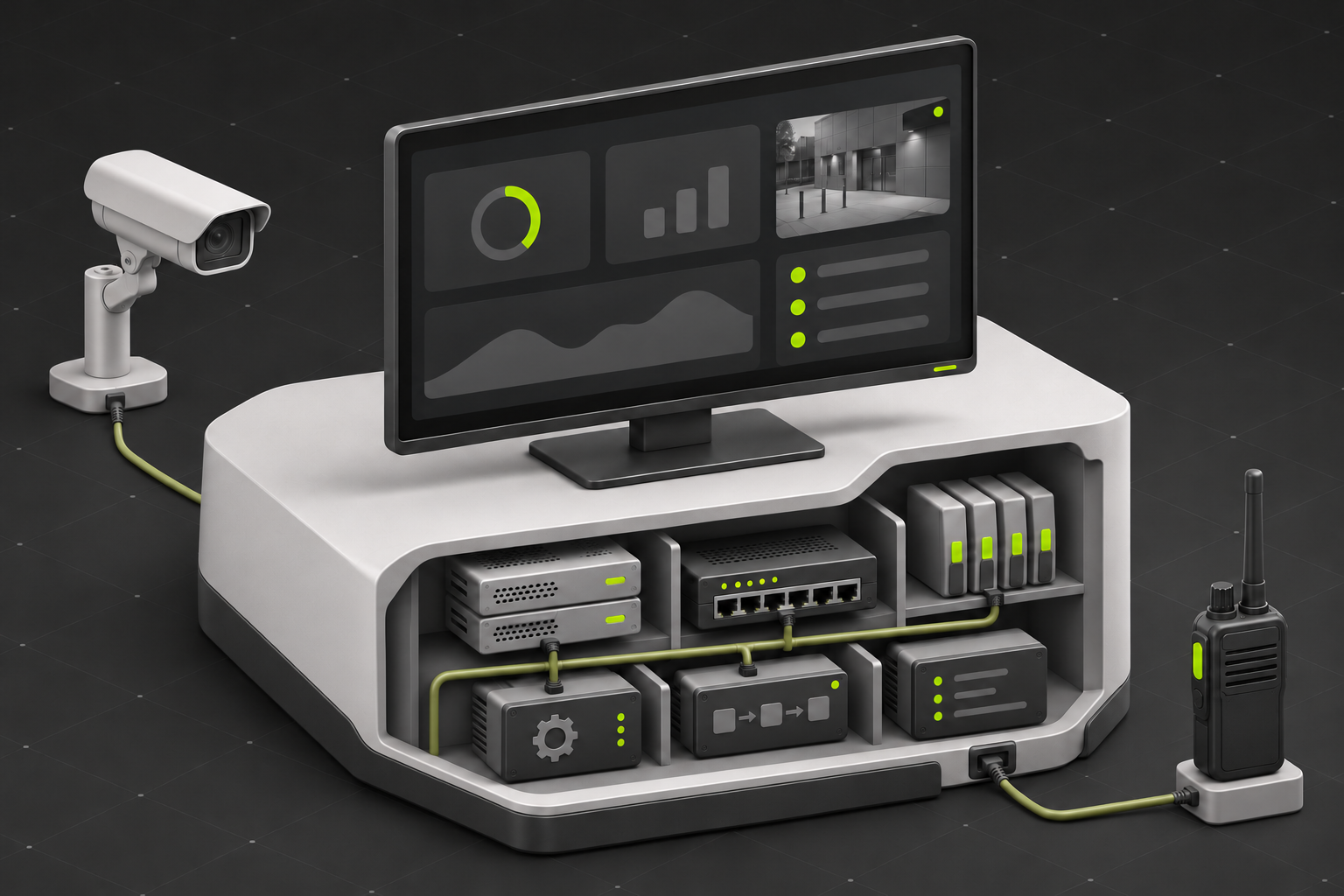
The dashboard presents what operators see. The supporting runtime, network boundary, ownership model, analytics platform, and response workflow determine how the system behaves. These five recent developments raise practical architecture and governance decisions for integrators and security teams.
1. Attackers are exploiting an unauthenticated Node-RED interface
(VulnCheck, Nov. 2; Siemens ProductCERT, updated Nov. 10)
CVE-2026-58115 is a missing-authentication vulnerability in the Node-RED HTTP interface that can let remote attackers execute system commands with maximum privileges without signing in. VulnCheck first detected automated exploitation on Oct. 30. It reported attacks against internet-reachable Node-RED instances without adminAuth enabled, but did not observe exploitation on Siemens products.
For affected SIMATIC IoT2050 devices running Industrial OS with Node-RED installed, Siemens recommends updating to V4.3.4-1 or later. Siemens lists no fix for devices running the Example Image with Node-RED installed and recommends hardening or uninstalling Node-RED on those devices.
Teldio Perspective: An orchestration layer should execute only approved actions within defined permissions. Authentication, role-based access, restricted network exposure, and auditable configuration changes reduce the risk that a workflow engine becomes an ungoverned control point.
2. Critical PHP vulnerabilities affect Siemens building and energy products
(CISA ICSA-26-316-01, Nov. 12; Siemens ProductCERT, updated Nov. 18)
CISA’s Nov. 12 advisory covers two PHP runtime vulnerabilities, CVE-2026-109618 and CVE-2026-109619, that can allow unauthenticated remote code execution in affected configurations. Siemens lists affected versions of AMIS TS, Energy Engage, blueplanet 360, and other building and energy products and notes that its assessment is ongoing. Under CVSS v3.1, Siemens rates CVE-2026-109618 at 9.8 and CVE-2026-109619 at 8.1. Both score 9.2 under CVSS v4.0. Siemens has released updates for several products and published mitigations for products without an available fix.
Teldio Perspective: Building and OT interfaces should remain within approved network boundaries. Organizations should apply the applicable vendor updates or mitigations, restrict internet exposure, segment affected systems, and confirm how adjacent integration services authenticate, authorize, and record configuration changes.
3. ADT agrees to a $15.3B take-private deal
(ADT Q3 results, Nov. 3; SEC dealer communication, Oct. 29)
Thrive Holdings has agreed to acquire ADT in an all-cash transaction valued at approximately $15.3B in enterprise value. The transaction remains subject to shareholder and antitrust approval and is expected to close in the first quarter of 2027. ADT will continue operating independently until closing. In an Oct. 29 dealer communication, ADT said there were no changes to existing dealer agreements, funding, or payment arrangements at that time.
Teldio Perspective: Ownership changes can alter roadmaps, partner programs, and commercial priorities over time. Integrators and customers should document which workflow logic, data, and interfaces can move across supported vendors, reducing dependency on a single manufacturer’s future decisions. In its acquisition announcement, ADT described Thrive Holdings as a long-term investor that helps established businesses improve their operations through technology. Separately, OpenAI announced an ownership stake in Thrive Holdings in December 2025.
4. Lumana positions existing cameras as a foundation for AI analytics
(Security Journal Americas interview with Lumana, Nov. 12)
In a November 12 interview, Lumana described how its platform connects to existing IP cameras and applies AI-powered monitoring without requiring organizations to replace their camera infrastructure. The company said its hybrid-edge architecture runs video analysis on-site using GPUs at the edge and sends only lightweight metadata and key events to the cloud.
Teldio Perspective: Adding AI camera analytics to existing cameras is nothing new and so largely an expected standard. That said, existing systems can remain useful when supported software adds new analytics or workflow capabilities. Built on a decoupled architecture framework, Teldio Fabric can coordinate supported events and actions across compatible systems, even in a system migration, while each source platform continues to perform its native function.
5. Violence-related injuries in Manitoba healthcare rose 41%
(Manitoba Association of Health Care Professionals, Nov. 12)
An interim report commissioned by the Manitoba Nurses Union and the Manitoba Association of Health Care Professionals found that accepted time-loss injury claims from assaults and violent acts in Manitoba healthcare rose 41%, from 368 in 2022 to 520 in 2025. Healthcare accounted for 42% of all accepted time-loss claims involving assaults and violence in Manitoba in 2025. The report calls for stronger enforcement, clearer accountability, and measurable action to protect healthcare workers.
Teldio Perspective: Hospitals should define who receives a workplace violence alert, who acknowledges it, and when it escalates. Where a hospital uses supported duress, nurse-call, or communication systems, Teldio Fabric can route approved event details to designated responders. That workflow supports the hospital’s policies, training, and staffing. Documenting where the alert originated, who was notified, and when it was acknowledged gives the hospital a record to review after an incident.
What it adds up to: Operational resilience depends on the systems and governance supporting the visible interface. These stories point to four decisions: secure and segment automation runtimes; document how workflows and data can move as vendors or ownership change; assess where supported software can extend existing infrastructure; and define how safety events are detected, routed, acknowledged, escalated, and reviewed. Each decision requires clear ownership and a documented architecture.
Which supporting layer of your security stack would cause the greatest operational disruption if it were compromised or changed?